COVID-19 & ARDS, – Day 7, Thoughts About The Pandemic

COVID-19 & ARDS (Acute Respiratory Distress Syndrome)

Daily thoughts & numbers on the COVID-19 pandemic from a M.D. working in the front lines at the Emergency Department in a hospital in Stockholm, Sweden. 

What we noticed at the hospitals is that it’s not just older people with underlying diseases that can get critically ill from COVID-19, there is another group of 30 to 70 year old (men) who smoke with hypertension that are also at risk of ending up at the ICU.

What we noticed is that even people in their twenties and thirties, men and women, can also get severe pneumonia with ARDS (although an even smaller sample than the one above – yet not an insignificant number however).

Even though the fatality rate is exceedingly low for people below 70 years of age with few underlying comorbidities, they still represent their fair share of patients treated at the ICU.

So far, of the 416 COVID-19 patients treated at the ICUs in Sweden we have the following numbers (unfortunately just age included in these numbers and not comorbidity/underlying diseases): *

  • 20-29 yrs: 3,4% (15 patients)
  • 30-39 yrs: 3,8% (16 patients)
  • 40-49 yrs: 10,6%  (44 patients)
  • 50-59 yrs: 25,2% (105 patients)
  • 60-69 yrs: 30,5% (124 patients)
  • 70-79 yrs: 22,3% (93 patients)
  • 80-89 yrs: 4,6% (19 patients)

Data above taken from SIR (Swedish Intensive Care Registry):

SIR31mars

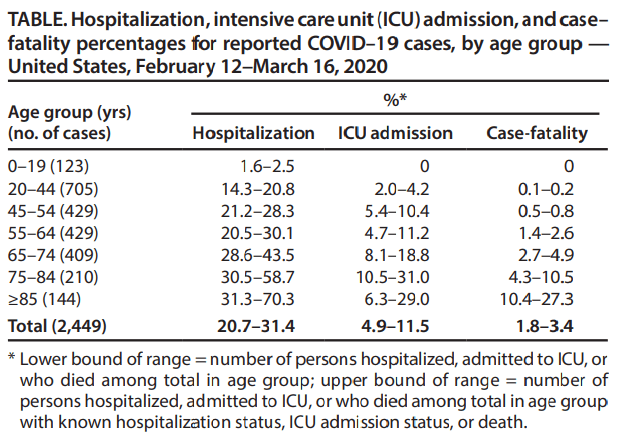
Similar numbers has been seen in other countries such as in USA: *
cdc icu

I can’t find any numbers/studies on ICU admission, age, AND comorbidity. But at my clinic and from the case-reports from other countries, many of the younger COVID-19 patients being admitted to the ICU don’t have any serious underlying diseases.

Sources: 

COVID-19 Numbers Sweden 2020-03-31 *

  • 180 deaths nationally
    • 103 of them in Stockholm
  • 4 435 confirmed cases nationally
    31fhm
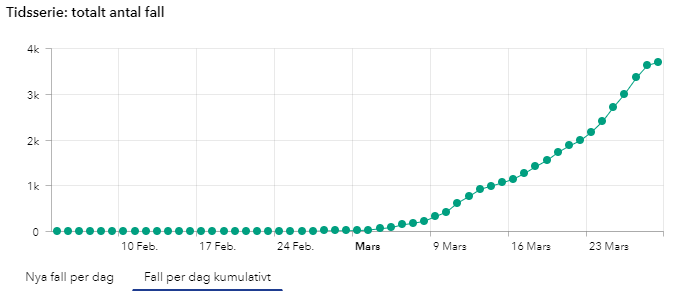
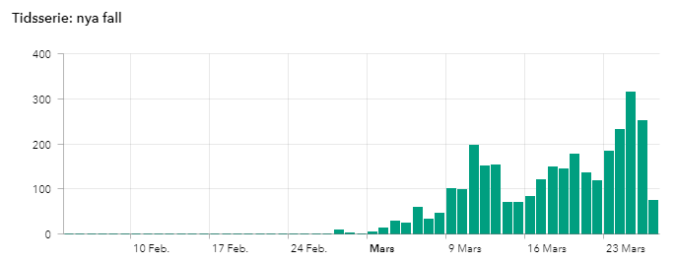
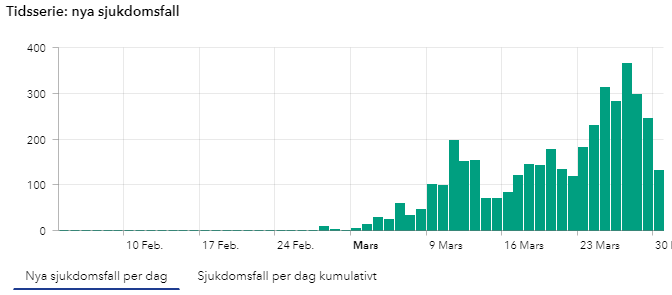
    New confirmed cases daily in Sweden. 
    (Number of COVID-19 cases over time in Sweden, updates during mornings at 14:00 so todays numbers are not yet complete until the next day).
    29fhmk
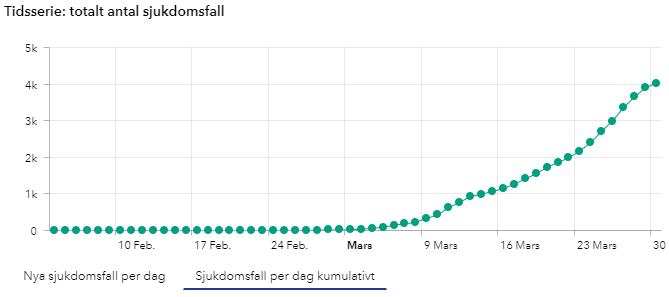
    New confirmed cases accumulated over time in Sweden. 
    (Number of COVID-19 cases over time in Sweden, updates during mornings at 14:00 so todays numbers are not yet complete until the next day).
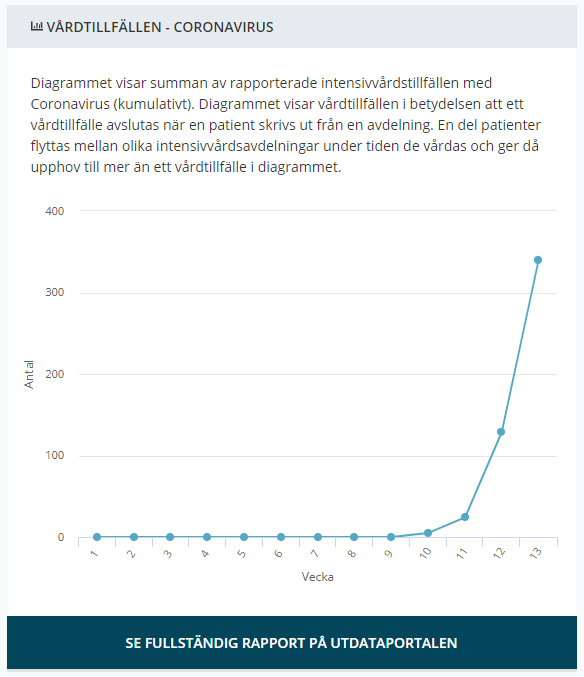
  • Intensive care Sweden*
    • 358 COVID-19 confirmed patients treated in the ICU in total so far
    • 9,1 days from symptoms to ICU
    • 24,9 % women
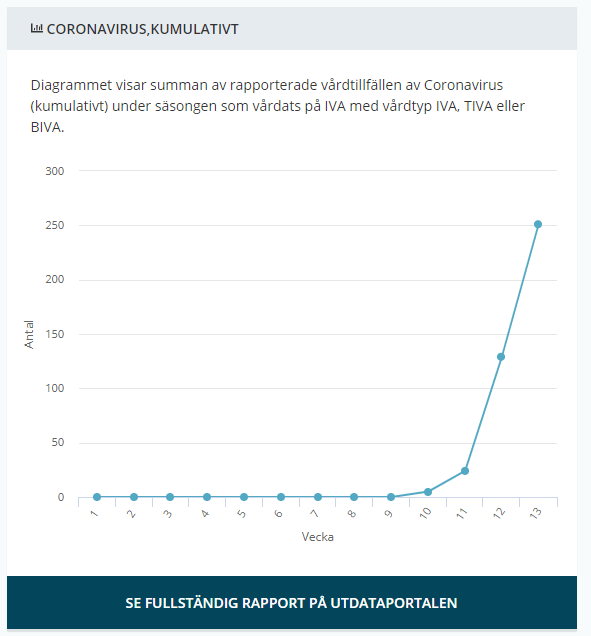
      31sir
      Total number of recorded of COVID-19 patients needing ICU care each week. From Week 10 it seems to more than triple each week, 5 →  24  → 130 → 413 → (464 this week up until now, however since it’s only tuesday this weeks numbers are yet incomplete)

COVID-19 Numbers Globally (updated today 2020-03-31 at 10:00 CET) *

  • 33 673 confirmed deaths
  • 719 758 confirmed cases
  • 202 countries, areas or territories with cases

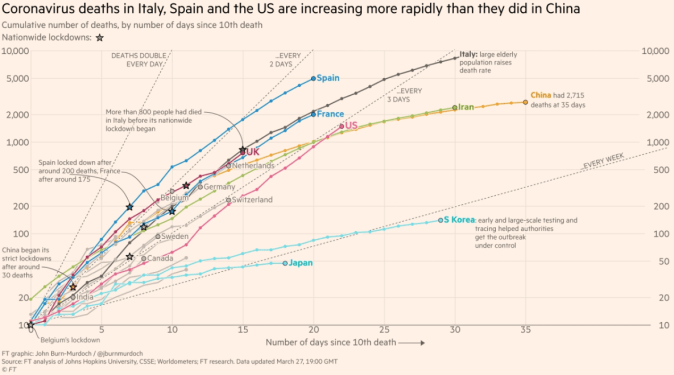
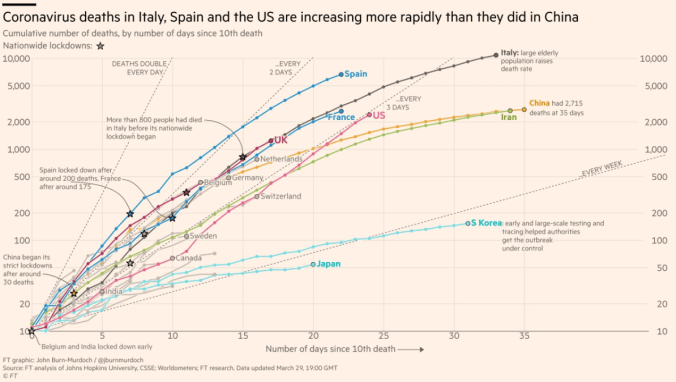
Financial Times Cumulative Number of Deaths Selected Countries (updated yesterday 2020-03-30 at 19:00 GMT) *

31ft

New Resources Added to ※ CTSOP

Image [SWE]: Cheat Key for Patients With ARDS by Karolinska *

That’s it until tomorrow, keep calm and stay safe!
COVID-19 Timeline – Day 6, Thoughts About The Pandemic

A timeline of the COVID-19 pandemic (Last updated 2020-04-09)

  • April 9, 2020 – Total confirmed COVID-19 cases in the world 1 506 936, total deaths world wide 89 931, number of deaths in Sweden are now 793. (4
    MARCH 2020
  • March 31, 2020 – Total confirmed COVID-19 cases in the world 809 608, total deaths world wide 39 545, number of deaths in Sweden are now 180(4
  • March 26, 2020 – US Senate passes $2 trillion COVID-19 aid package. (3
  • March 26, 2020 – Total confirmed cases in the US reach 82,404 — the highest in the world — surpassing China’s 81,782 and Italy’s 80,589.
  • March 26, 2020 – Roughly 1 in 2 Americans go on lockdown as 22 states issue stay-at-home orders.
  • March 23, 2020 – New York City confirms 21,000 cases, making it the biggest epicenter of the outbreak in the US.
  • March 22, 2020 – About 1 in 3 Americans are under lockdown as 12 states issue stay-at-home orders.
  • March 21, 2020 – Unemployment insurance claims rose by over 3M from March 7-21, reaching their highest level yet. (2)
  • March 20-21, 2020 – Italy reports the two highest single-day death tolls for any country: 627 on March 20 and 793 on March 21.
  • March 11, 2020 [SWE]Sweden records its first death.  
  • March 8, 2020 – Italy places all 60 million residents on lockdown.
    FEBRUARY 2020
  • February 29, 2020US reports first death on American soil.
  • February 21, 2020Italy outbreak begins. 
  • February 19, 2020Iran outbreak begins. 
  • February 12, 2020Coronavirus cases start to spike in South Korea.
  • February 11, 2020 [WHOWHO announces that the new coronavirus disease will be called “COVID-19.”
  • February 9, 2020Death toll in China surpasses that of the 2002-2003 SARS epidemic, with 811 deaths recorded.
  • February 7, 2020Chinese whistleblower Li Wenliang dies.
  • February 2, 2020First death outside China is recorded in the Philippines.
    JANUARY 2020 
  • January 31, 2020President Trump bans foreign nationals from entering the US if they were in China within the prior two weeks.
  • January 31, 2020 [SWE]First confirmed COVID-19 case in Sweden, a 20-something woman who traveled home from Wuhan.   
  • January 30, 2020 [WHO]WHO declares a global public-health emergency. 
  • January 23, 2020Wuhan is placed under quarantine, Hubei province follows within days.
  • January 20, 2020First US case is reported: a 35-year-old man in Snohomish County, Washington.
  • January 13, 2020First coronavirus case outside of China is reported in Thailand.
  • January 12, 2020China shared the genetic sequence of COVID-19. (6)
  • January 11, 2020China records its first death.
  • January 7, 2020Chinese authorities identify a new type of coronavirus (called novel coronavirus or nCoV). 
  • January 1, 2020Huanan Seafood Wholesale Market close
  • January 1, 2020 [WHOSets up the IMST (Incident Management Support Team) across the three levels of the organization: headquarters, regional headquarters and country level, putting the organization on an emergency footing for dealing with the outbreak. (6)
    DECEMBER 2019
  • December 31, 2019Chinese Health officials inform the WHO about a cluster of 41 patients with a mysterious pneumonia. Most are connected to Huanan Seafood Wholesale Market.

Sources: 

      1. Business Insider
      2. Visual Capitalist
      3. BBC
      4. John Hopkins Coronavirus Resource Center
      5. FHM
      6. WHO

COVID-19 Numbers Sweden 2020-03-30 *

  • 146 deaths nationally
    • 88 of them in Stockholm
  • 4 028 confirmed cases nationally
    30fhm
    New confirmed cases daily in Sweden. 
    (Number of COVID-19 cases over time in Sweden, updates during mornings at 14:00 so todays numbers are not yet complete until the next day).
    30fhmk
    New confirmed cases accumulated over time in Sweden. 
    (Number of COVID-19 cases over time in Sweden, updates during mornings at 14:00 so todays numbers are not yet complete until the next day).
  • Intensive care Sweden*
    • 311 COVID-19 confirmed patients treated in the ICU in total so far
    • 9,4 days from symptoms to ICU
    • 26,4 % women
      30sir
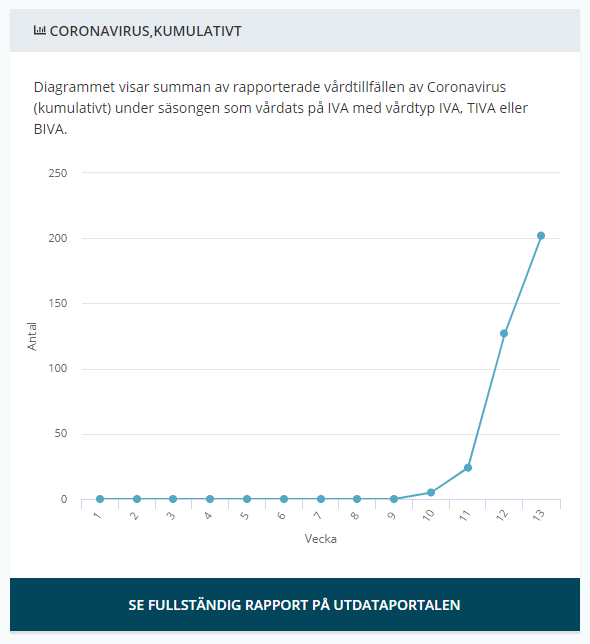
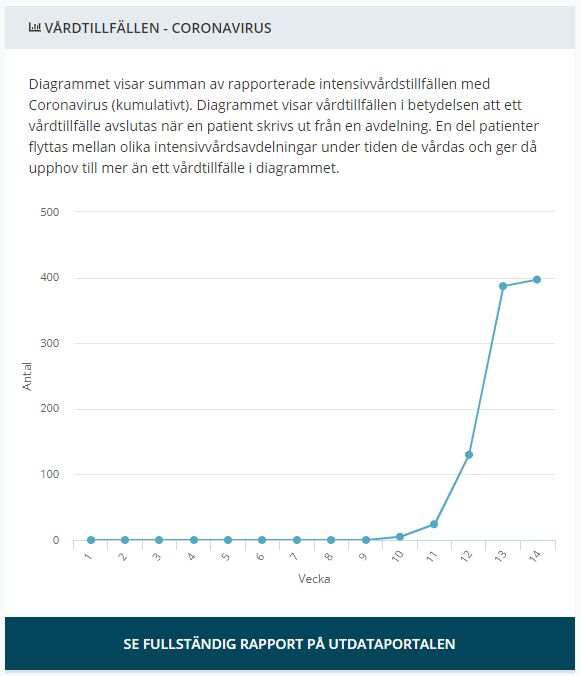
      Total number of recorded of COVID-19 patients needing ICU care each week. From Week 10 it seems to more than triple each week, 5 →  24  → 127 → 387 (397 this week up until now, however since it’s only monday this weeks numbers are yet incomplete)

COVID-19 Numbers Globally (updated today 2020-03-29 at 18:00 CET) *

  • 30 039 confirmed deaths
  • 638 146 confirmed cases
  • 202 countries, areas or territories with cases

Financial Times Cumulative Number of Deaths Selected Countries (updated yesterday 2020-03-29 at 19:00 GMT) *

30FT

New Resources Added to ※ CTSOP

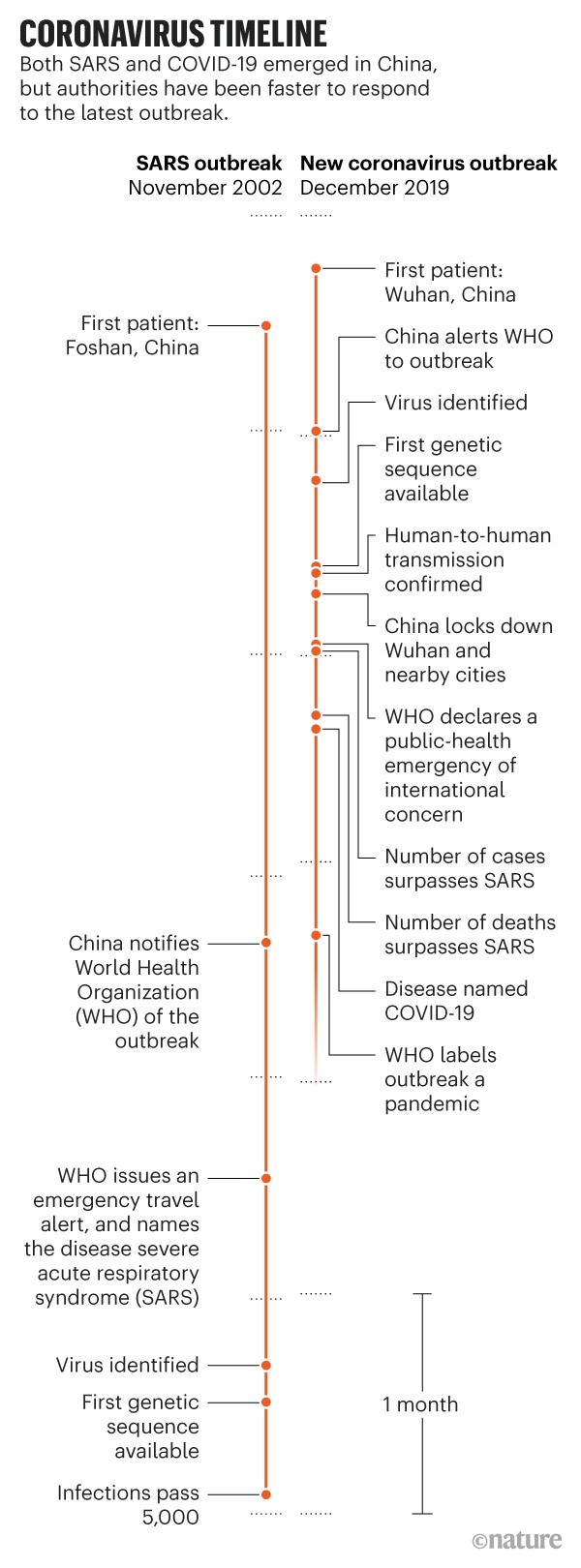
Image: Timeline SARS vs COVID-19 *

CORONAVIRUS TIMELINE: Comparison of the SARS and new coronavirus outbreak over time.

That’s it until tomorrow, keep calm and stay safe!
7 Clinical Observations – Day 5, Thoughts About The Pandemic

What is the typical COVID-19 case? 

Daily thoughts & numbers on the COVID-19 pandemic from a M.D. working in the front lines at the Emergency Department in a hospital in Stockholm, Sweden. 

Before COVID-19 patients started to pour into our clinic, physicians at other clinics said that we would, after a couple cases, quickly start recognizing the typical SARS-CoV-2 infected patient, even before the lab-test confirmation arrived.

I tend to agree, they seem to have their own distinct features. I tried to list some of the observation we (and others) have made:

  1. High CRP but normal WBC – Perhaps the most distinct feature in my opinion. In patients with other infections (such as the flu) WBC often increases first followed by CRP that lags by a day or so. That seems not to be the case with COVID-19 patients. They can have very high amounts of CRP yet still maintain normal WBC. This feature helps us be more restrictive with antibiotics and instead take help from the lab-test procalcitonin (PCT) that usually is also low in viral infections, that seems to be the case with COVID-19 too, when PCT is elevated we add antibiotics to their treatment.
  2. Basal crackles are heard with the stethoscope – Most patients being admitted to the hospital have developed pneumonia and crackles can therefor (often) be heard.
  3. The most common symptoms are pretty non-specific: *
    • fever
    • cough
    • fatigue
    • sputum production
    • shortness of breath
  4. The radiology in patients that develop more severe ARDS reminds me more of PCP than the flu – The pattern seen on CT/X-Ray, among other findings, is peripheral distribution of ground-glass changes. It has such a distinctive look that our radiologists have started writing if they have or don’t have a high COVID-19 suspicion. *
  5. The test can be false positive – If the clinic looks like COVID-19, retake the test. If it’s still negative consider taking samples with the help of bronchoscopy.
  6. Take ABG and follow PFI, if low consider moving to ICU immediately for intubation – As the case is with all ARDS-patients, except the severe cases with COVID-19 seem to get critical quicker than we are used to.
  7. Be liberal with lab-tests – Besides basic labs check ferritin, blood-cells (lymphocytes), D-dimer, troponin, and LD as they can be predictive of severity. *

COVID-19 Numbers Sweden 2020-03-29 *

  • 110 deaths nationally
    • 67 of them in Stockholm
  • 3 700 confirmed cases nationally
    29fhm
    New confirmed cases daily in Sweden. 
    (Number of COVID-19 cases over time in Sweden, updates during mornings at 14:00 so todays numbers are not yet complete until the next day).
    29fhmk
    New confirmed cases accumulated over time in Sweden. 
    (Number of COVID-19 cases over time in Sweden, updates during mornings at 14:00 so todays numbers are not yet complete until the next day).
  • Intensive care Sweden*
    • 269 COVID-19 confirmed patients treated in the ICU in total so far
    • 9,5 days from symptoms to ICU
    • 26,8 % women
      29sir
      Total number of recorded of COVID-19 patients needing ICU care each week. From Week 10 it seems to more than double each week, 5 →  24  → 127 → (340 this week up until now, however since it’s only sunday this weeks numbers are yet incomplete)

COVID-19 Numbers Globally (updated today 2020-03-29 at 10:00 CET) *

  • 29 957 confirmed deaths
  • 634 835 confirmed cases
  • 202 countries, areas or territories with cases

Financial Times Cumulative Number of Deaths Selected Countries (updated yesterday 2020-03-28 at 19:00 GMT) *

29ft

New Resources Added to ※ CTSOP 

  • Prone Position in ARDS How To – NEJM video 5 minutes.
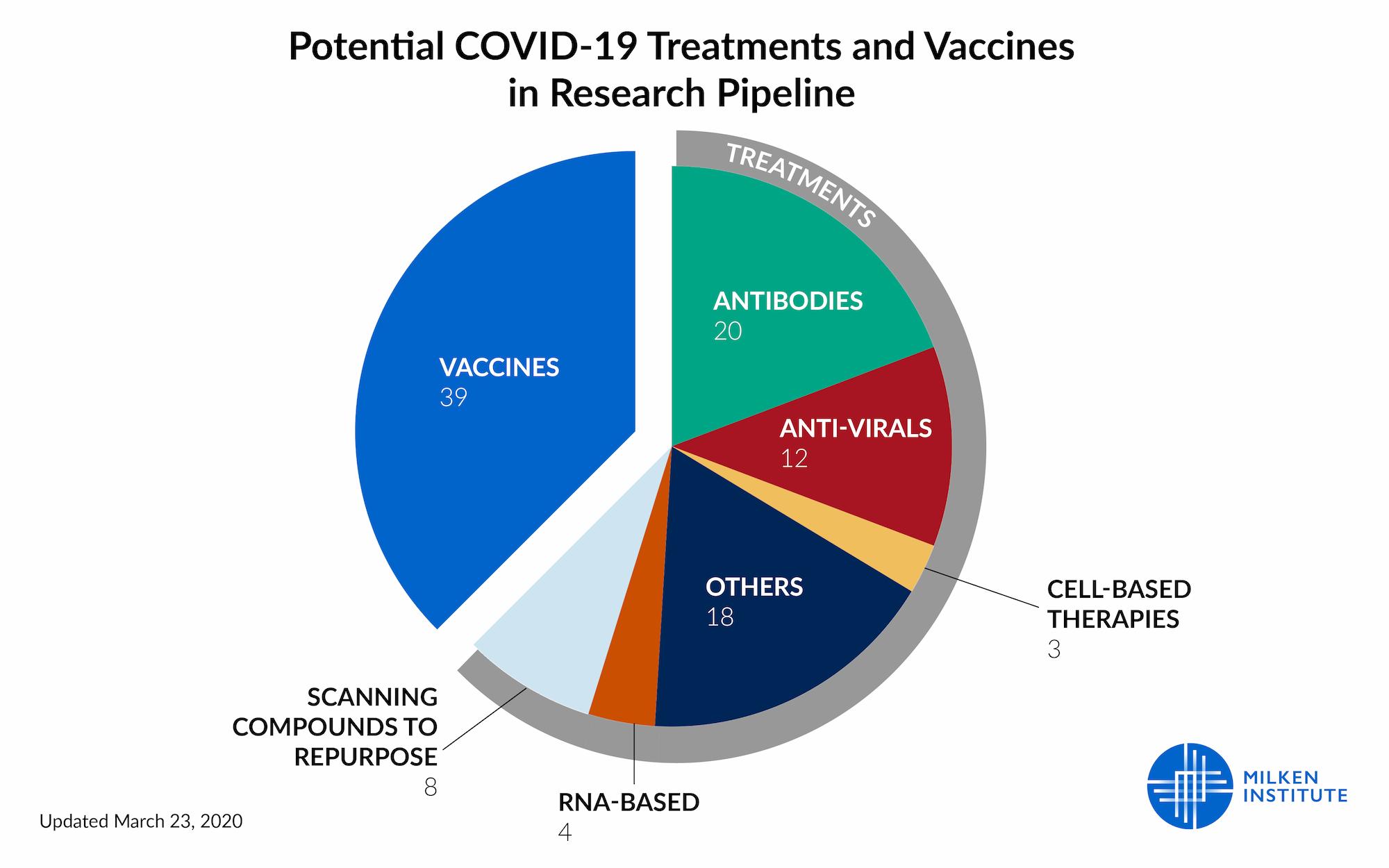
  • Treatment tracker – The Milken Institute recently released a detailed tracker to monitor the progress of each of the more than 60 known COVID-19 treatments and preventions currently in development.

Image: Treatment Tracker for COVID-19 *

That’s it until tomorrow, keep calm and stay safe!
Exponential Growth – Day 4, Thoughts About The Pandemic

How do we best visualize trends in the pandemic? 

Daily thoughts & numbers on the COVID-19 pandemic from a M.D. working in the front lines at the Emergency Department in a hospital in Stockholm, Sweden. 

People are generally not very good at visualizing or understanding exponential growth since most of our daily life exists on a linear scale. Basically anything that increases with a certain percentage rate will also double every so often. The higher the percentage in increase the closer the intervals between each doubling, which makes it quickly grow into very large numbers. The SARS-CoV-2 virus spreads exponentially at a very high spread rate.

So linear graphs visualizing the spread can fall short of visualizing the trend. Enter minutephysics in collaboration with Aatish: *

Since the number of confirmed cases can be confounded by the number of tests each country takes, below is instead a logarithmic graph with New Reported Confirmed Deaths in the Past Week due to Covid-19 on one axis and Total Reported Deaths on the other in selected countries: *

28deathlog2

Judging by the logarithmic graphs there is, so far, no indication that any of the measurements any of the western countries have taken to flatten the curve is yielding any success at all.

If the charts and numbers seem discouraging, remember that the exponential growth of any virus can’t go on forever: *

The spread of the coronavirus will be exponential – which is bad.  But its inevitable decline will also be exponential, which is good. (…) since the number of new cases also depends on the number of infectious people (which declines as folks recover), that will also be exponential, but exponentially decreasing.
– Seth Shostak

COVID-19 Numbers Sweden 2020-03-28 *

  • 102 deaths nationally
    • 63 of them in Stockholm
  • 3 447 confirmed cases nationally
    28fhm
    New confirmed cases daily in Sweden. 
    (Number of COVID-19 cases over time in Sweden, updates during mornings at 14:00 so todays numbers are not yet complete until the next day).
    28fhmk
    New confirmed cases accumulated over time in Sweden. 
    (Number of COVID-19 cases over time in Sweden, updates during mornings at 14:00 so todays numbers are not yet complete until the next day).
  • Intensive care Sweden: *
    • 246 COVID-19 confirmed patients treated in the ICU in total so far
    • 9,4 days from symptoms to ICU
    • 27,2 % women
      28SIR
      Total number of recorded of COVID-19 patients needing ICU care each week. From Week 10 it seems to more than double each week, 5 →  24  → 127 → (308 this week up until now, however since it’s only saturday this weeks numbers are yet incomplete)

COVID-19 Numbers Globally (updated today 2020-03-28 at 10:00 CET) *

  • 26 495 confirmed deaths
  • 571 678 confirmed cases
  • 201 countries, areas or territories with cases

Financial Times Cumulative Number of Deaths Selected Countries (updated yesterday 2020-03-27 at 19:00 GMT) *

28FT

New Resources Added to ※ CTSOP 

  • John Hopkins – COVID-19 Resource Center, worldwide numbers updated more frequently than WHO.int.

Image: Recommendations for COVID-19 Intubation by canadiEM *

COVID-19 Intubation Recommendations

That’s it until tomorrow, keep calm and stay safe!
Treatment Alternatives – Day 3, Thoughts About The Pandemic

Can hydroxychloroquin in combination with azithromycin (antibiotics) help treat COVID-19 patients? 

Daily thoughts & numbers on the COVID-19 pandemic from a M.D. working in the front lines at the Emergency Department in a hospital in Stockholm, Sweden. 

In the absence of a vaccine, several already known and tested drugs have been speculated to help mitigate the effects of SARS-CoV-2.

Two of the most promising is the combination of the anti-malaria drug hydroxychloroquine (Plaquenil) with the antibiotic Azithromycin.

In a (very) small study, twenty COVID-19 confirmed patients were treated with hydroxychloroquine, six were treated with the combination of hydroxychloroquine, and sixteen were used as control. *

The results were quite promising (however such as small sample size & NON-randomized study makes the study flawed in power and design, and more data is still needed):

kloro

Figure 2. Percentage of patients with PCR-positive nasopharyngeal samples from inclusion to day6 post-inclusion in COVID-19 patients treated with hydroxychloroquine only, in COVID-19 patients treated with hydroxychloroquine and azithomycin combination, and in COVID-19 control patients. *

In the choice between chloroquine and hydroxychloroquine, the latter seems to be more effective and with less side-effects. As one in vitro study comparing the two concluded: *

Chloroquine has been sporadically used in treating SARS-CoV-2 infection. Hydroxychloroquine shares the same mechanism of action as chloroquine, but its more tolerable safety profile makes it the preferred drug to treat malaria and autoimmune conditions. We propose that the immunomodulatory effect of hydroxychloroquine also may be useful in controlling the cytokine storm that occurs late-phase in critically ill SARS-CoV-2 infected patients.  (…) The pharmacological activity of chloroquine and hydroxychloroquine was tested using SARS-CoV-2 infected Vero cells. Physiologically-based pharmacokinetic models (PBPK) were implemented for both drugs separately by integrating their in vitro data. (…) Hydroxychloroquine was found to be more potent than chloroquine to inhibit SARS-CoV-2 in vitro. *

One small study is, of course, not enough and more rigorous studies with a larger number of patients are being conducted.

Another alternative being explored, and that seems promising, is Remdesivir, an antiviral drug that was developed against the Ebola-virus.

In Stockholm, right now, the drug that sometimes is used/tested on COVID-19 patients with more severe symptoms is chloroquine and not hydroxychloroquine. The rationale behind that seems to be that our infection doctors have more clinical experience with chloroquine than Plaquenil.

COVID-19 Numbers Sweden 2020-03-27 *

  • 92 deaths nationally
    • 62 of them in Stockholm
  • 3 046 confirmed cases nationally
    covswe27
    (Number of COVID-19 cases over time in Sweden, updates during mornings so todays numbers are not yet complete until the next day).
  • Intensive care Sweden: *
    • 214 COVID-19 confirmed patients treated in total so far
    • 9,4 days from symptoms to ICU
    • 25,7 % women
      icu27
      Total number of recorded of COVID-19 patients needing ICU care each week. From Week 10 it seems to more than double each week, 5 →  24  → 127 → (284 this week up until now, however since it’s only friday this weeks numbers are yet incomplete)

COVID-19 Numbers Globally (updated today 2020-03-27 at 10:00 CET) *

  • 23 335 confirmed deaths
  • 509 164 confirmed cases
  • 201 countries , areas or territories with cases

Financial Times Cumulative Number of Deaths Selected Countries (updated yesterday 2020-03-26 at 19:00 GMT) *

FT27

New Resources Added to ※ CTSOP 

  • STUDY 1 – Hydroxychloroquine and azithromycin as a treatment of COVID-19: results of an openlabel non-randomized clinical trial
  • STUDY 2 – In Vitro Antiviral Activity and Projection of Optimized Dosing Design of Hydroxychloroquine for the Treatment of Severe Acute Respiratory Syndrome Coronavirus 2 (SARS-CoV-2)
  • Radiopaedia on COVID-19 radiology

Image: CT thorax of a patient with COVID-19 pneumonia *

CT image above from Radiopaedia: *

The primary findings on CT in adults have been reported 13,17,27,28,36:

The ground-glass and/or consolidative opacities are usually bilateral, peripheral, and basal in distribution 2,32.

retrospective study of 112 patients found 54% of asymptomatic patients had pneumonic changes on CT 67.

Some papers suggest that CT has a sensitivity that could justify its use in the early imaging in the acute setting in select cases. Yet its use as a primary screening tool is currently discouraged, not least because these studies tended to suffer from selection bias 52,57,87,88. In a recent investigation, these chest CT findings had the highest discriminatory value (p<0.00151:

  • peripheral distribution
  • ground-glass opacity
  • bronchovascular thickening (in lesions) *

That’s it until tomorrow, keep calm and stay safe!
Predicting the Critical – Day 2, Thoughts About The Pandemic

Can we predict which COVID-19 patients will get critically ill in advance? 

Daily thoughts & numbers on the COVID-19 pandemic from a M.D. working in the front lines at the Emergency Department in a hospital in Stockholm, Sweden. 

Back from my night shift at AVA (Our Emergency Ward), and the onslaught of COVID-19 patients having hit all the emergency hospitals of Stockholm are now filling up the wards including ours (our ward increased its capacity from 16 to 20 patients over night). The difference from just a couple days ago is staggering.

What we have seen when it comes to COVID-19 is that they seem to tilt from stable to unstable much more quickly than other viral diseases such as the flu. Looking to predict the crisis before it arrives, makes us look for clinical and lab markers that can give us a heads up before the patient crashes.

COVID-19, like all pathologies, has us clinicians looking for the signal in the midst of all the patient data noise.

The Lancet published a retrospective cohort study 2020-03-11, looking at the clinical course and risk factors for mortality of 191 adult patients with laboratory-confirmed COVID-19 in Wuhan, China, and found several interesting markers. * Some of the significant markers seem to be:

  • D-dimer
  • (LOW) lymphocyte count
  • Serum Ferritin
  • Lactate dehydrogenase
  • High-sensitive cardiac troponin I
  • IL-6

They study in The Lancet found that:

Baseline lymphocyte count was significantly higher in survivors than non-survivors; in survivors, lymphocyte count was lowest on day 7 after illness onset and improved during hospitalisation, whereas severe lymphopenia was observed until death in non-survivors. Levels of d-dimer, high-sensitivity cardiac troponin I, serum ferritin, lactate dehydrogenase, and IL-6 were clearly elevated in non-survivors compared with survivors throughout the clinical course, and increased with illness deterioration (figure 2). In non-survivors, high-sensitivity cardiac troponin I increased rapidly from day 16 after disease onset, whereas lactate dehydrogenase increased for both survivors and non-survivors in the early stage of illness, but decreased from day 13 for survivors.

Figure thumbnail gr2

Figure 2 Temporal changes in laboratory markers from illness onset in patients hospitalized with COVID-19 

Figure shows temporal changes in d-dimer (A), lymphocytes (B), IL-6 (C), serum ferritin (D), high-sensitivity cardiac troponin I (E), and lactate dehydrogenase (F). Differences between survivors and non-survivors were significant for all timepoints shown, except for day 4 after illness onset for d-dimer, IL-6, and high-sensitivity cardiac troponin I. For serum ferritin (D), the median values after day 16 exceeded the upper limit of detection, as indicated by the dashed line. COVID-19=coronavirus disease 2019. IL-6=interleukin-6.
— Lancet 2020-03-11. *

For predictors in our patients we currently take, besides basic labs (that include lymphocytes), also Ferritin, LD, & (sometimes) D-dimer.

Basically a patient with low lymphocytes and/or elevated Ferritin, LD, or D-Dimer is at increased risk for getting critically ill.

Predictive markers help us consider intensive care and or antiviral treatment sooner in the patients we think are at risk, hopefully staying ahead of the crash and thereby increasing the odds of a more favourable outcome in each individual confirmed COVID-19 case.     

COVID-19 Numbers Sweden 2020-03-26 *

  • 66 deaths nationally
    • 42 of them in Stockholm
  • 2 806 confirmed cases nationally
    Tabellen visar fall av covid-19 i Sverige 26 mars 2020.
    (Number of COVID-19 cases over time in Sweden, updates during mornings so todays numbers are not yet complete until the next day).
  • Intensive care: *
    • 200 patients
    • 9,3 days from symptoms to ICU
    • 25,5 % women
      icu3
      Total number of recorded of COVID-19 patients needing ICU care each week. From Week 10 it seems to more than double each week, 5 →  24  → 127 → (251 this week up until now, however since it’s only thursday this weeks numbers are yet incomplete)

COVID-19 Numbers Globally (updated today 2020-03-26 at 10:00 CET) *

  • 20 832 confirmed deaths
  • 462 684 confirmed cases
  • 199 countries , areas or territories with cases

New Resources Added to ※ CTSOP 

COVID-19 Image: COVID-19 Sheet *

Screenshot 2020-03-08 at 08.12.00

That’s it until tomorrow, keep calm and stay safe!

All Systems Go – Day 1, Thoughts About The Pandemic

Are All Systems Go? 

Daily thoughts & numbers on the COVID-19 pandemic from a M.D. working in the front lines at the Emergency Department in a hospital in Stockholm, Sweden. 

‘All systems go’ is a phrase that originated in the 1960s aerospace industry, indicating preparedness to launch. It’s used in colloquial language as an statement for: everything is ready. * *

Image result for are all systems go

By now the COVID-19 pandemic is a global phenomenon with the health care of some places having seen and survived the peak while others are preparing for it. Stockholm falls into the latter.

Right now our healthcare system, like that of other countries, is undergoing significant mobilization of resources preparing for the worst crisis in health care seen in modern times, the bulk of which, we think, is yet to come.

From inventory of personal and equipment to recruiting large number of medical students as health care workers and building a COVID-19 hospital in the matter of days at Älvsjö in Stockholm with help from the military. * *

People are told to change their social behaviour and huge amounts of capital is being invested to help out medical organizations.

At the end of the day, most agree that none of it will be enough – but that we must do as much as we can to prepare for the accelerating spread of SARS-CoV-2.

‘Are All Systems Go?’ then becomes a daily question for the clinician, a check-in to make sure everything is in place and working as well as possible. But it also becomes an extremely dynamic question as resources and systems have changed and will change drastically over time, both with the sheer numbers of infected increasing (both patients and healthcare workers), and also due to the fact of new personal recruitments and the constant ongoing mobilisation of new resources.

On a personal level it’s not just a daily question, but a great question to ask before each shift in the emergency room or at the emergency ward:

  • What protective gear do we still have left and are they at hand where they need to be?
  • What are the latest routines when it comes to the testing and management of COVID-19?
  • What is plan B and C and D… when plan A fails and the system becomes swamped?

Asking ‘Are All Systems Go’? and checking your resources at each work shift was a common practice among experienced emergency, surgeon, and intensive care physicians even before COVID-19, however it’s never been more important than right now under this ongoing pandemic.

COVID-19 Numbers Sweden 2020-03-25 *

  • 42 deaths nationally
    • 21 of them in Stockholm
  • 2 510 confirmed cases nationally
    Tabellen visar fall av covid-19 i Sverige 25 mars 2020.
    (Number of COVID-19 cases over time in Sweden, updates during mornings so todays numbers are not yet complete until the next day).
  • Intensive care: *
    • 158 patients
    • 8,9 days from symptoms to ICU
    • 23 % women
      intensivvård
      Total number of recorded of COVID-19 patients needing ICU care each week. From Week 10 it seems to more than double each week, 5 →  24  → 127 → (202 this week up until now, however since it’s only wednesday this weeks numbers are yet incomplete)

COVID-19 Numbers Globally (updated yesterday 2020-03-24 at 22:53 CET) *

  • 16 362 confirmed deaths
  • 375 498 confirmed cases
  • 195 countries , areas or territories with cases

New Resources Added to ※ CTSOP 

  • COVID-19 main page created, with brief info on the virus and also links to the pages listed below
    • A-Z Resources COVID-19 page created, a subpage with useful links/resources that I will add to continuously over time
    • A-Z Studies COVID-19 page created, subpage with studies published in medical journals that I will add to continuously over time

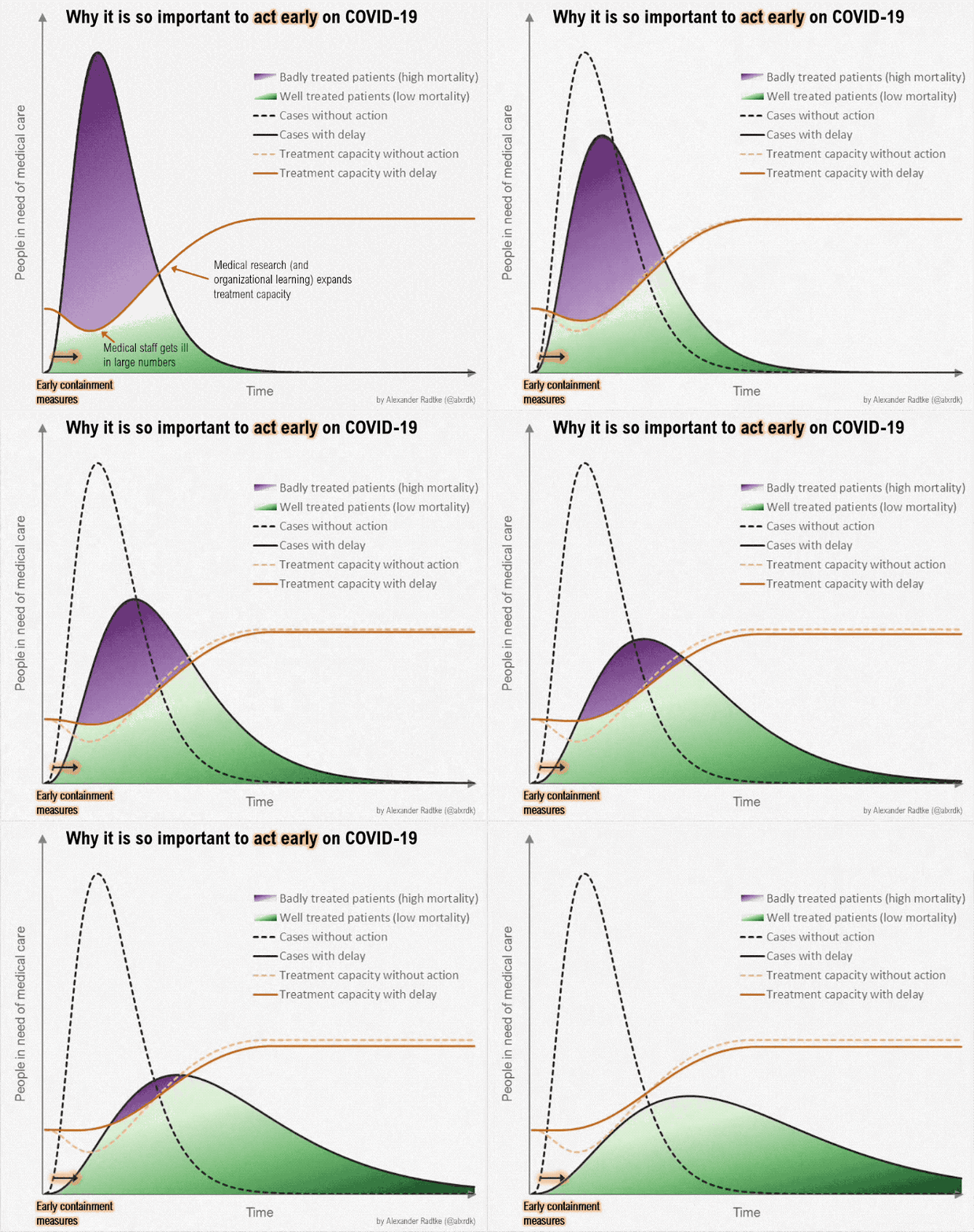
COVID-19 Image: Flatten The Curve * *

Image result for flatten the curve gif

Picture above is what every health care system and political system on earth is trying to achieve right now with social guidelines and mobilization of resources.

All systems go.

ER Checklist — v1.0

Most of the mistakes are not failures of incompetence. When things go wrong in the ER/ED it’s because we fail to do the basics well. This is a (incomplete) checklist, to help remind you not to take the basics for granted.

As always, you do your ABCDE, and make sure you don’t slip on the following steps.

– – – – – – – – – – – – – – – –

※ Do the basics well.  

  • Lab. 
    – Check anomalies, pay extra attention to electrolytes (like potassium and sodium), blood count, Creatinine, and CPR/Leukocytes.
    – Then check change over time, normal values that have changed significantly over time can indicate something pathological.
    – A blood gas is almost always a good idea (for most cases a venous sample is sufficient).
     
  • ECG.
    – Check it systematically everytime, even absent chest pain.
    – Take serial-ECG:s when needed.
    – Make sure you can recognize Wellens, De Winter’s, and other non-schoolbook pathologies that might get missed.
    Lewis leads are fun, but get a transesophageal electrocardiography when needed.
  • Physiology. 
    – Pay attention to pulse, blood pressure, breathing, and current deviations and deviations over time (take serial NEWS to help you assess).
    – Cushing’s syndrome if head trauma?
    – Is their pulse at a false low (pacemaker? beta blockers?)?
    – Does the physiology and the clinical presentation add up?
  • Trauma.
    – C-ABCDE (catastrophic bleeding).
    – If the CT-scan doesn’t find anything pathological, but clinical evaluation indicates it, get an MRI.
    – Call in help early when needed.
  • Listen and observe.
    – What is the patient telling you?
    – What are they not saying?
    – Are you asking the right questions?
    – What do you observe?
    – Does it all add up?
  • Read & write the medical journal.
    – At the ER: look for allergies (warnings?), addictions (to opiates?), medications (anticoagulants? beta-blockers? sedatives?), and previous medical history.
    – At the ED: same as above, but also for patients with long hospital duration, try to do a summary — take the time most don’t, build a concise and cogent picture of the patient.
    – If a senior colleague makes a decision you don’t agree with, make sure to document who took that decision thoroughly.

※ CRM — know your team and resources.   

  • Location & stuff. 
    – Where is the defibrillator located?
    – How does the NIV work?
    – Etc.
  • People. 
    – Who are you working with today?
    – Who is the most experienced among each personal category?
    – How can you get a hold of each other if/when needed?
  • Externals. 
    – Important numbers you might need to dial quick, like to anesthesiologists, surgeons, cardiologists, and radiologists (always carry a cheatsheet).
    – Know the most common medications and doses you need to give when delay can be fatal, like the treatment for anaphylaxis, CPR, hyperkalemia, hyponatremia, severe gastrointestinal bleeding, and sepsis.

※ CRM — Communication. 

  • Make time for a time-in, where the team present itself and different roles are outlined.
  • If possible make time for a time-out when possible after each case or, at least, after each day, and evaluate in order to help improve the next case/day.

– – – – – – – – – – – – – – – –

That’s it. It’s not by any means a complete list. But it’s a good starting point. I will be adding, subtracting, and refining the list as I keep working in the ER and on this site.

It’s a work in progress.